
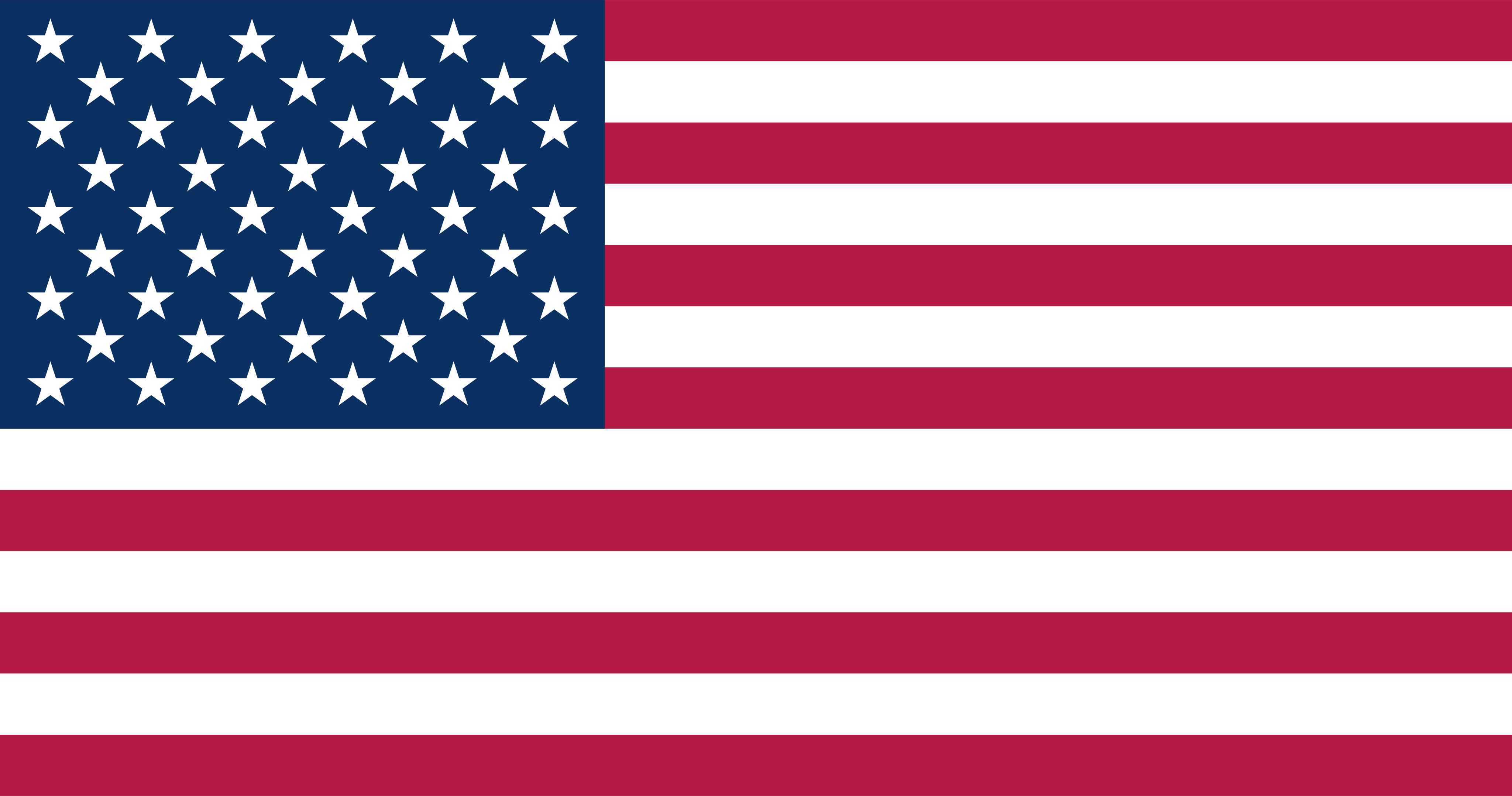
A flag at half-staff is the nation thinking out loud. It marks mourning, remembrance, and respect, and because the sight is so striking, "why is the flag at half-staff today?" is one of the most searched flag questions in America. Here is how the system actually works.
Who can order it
Half-staff is not a matter of local mood. Under the U.S. Flag Code, the order comes from specific offices:
- The President orders flags to half-staff on federal property nationwide, typically on the death of present or former government officials, foreign dignitaries, or in the wake of national tragedies.
- A state governor may order flags to half-staff within the state on the death of a present or former state official, or of a member of the Armed Forces from that state who dies on active duty.
- The Mayor of the District of Columbia holds the same authority for D.C.
Private citizens, businesses, and towns then follow suit voluntarily. Nothing prevents you from lowering your own flag as a mark of respect, and after local tragedies many communities do exactly that.
The days fixed by law
Several half-staff days recur every year:
- Memorial Day (last Monday in May): half-staff from sunrise until noon only, then raised to full staff until sunset. The morning honors the fallen; the afternoon honors the living who carry the country forward.
- Peace Officers Memorial Day (May 15): half-staff all day, unless it falls on Armed Forces Day.
- Patriot Day (September 11): half-staff all day in remembrance of the victims of the September 11 attacks.
- National Firefighters Memorial Day (typically the first Sunday in October, by proclamation).
- Pearl Harbor Remembrance Day (December 7): half-staff all day.
How long the flag stays lowered
For deaths of national figures, the Flag Code sets specific mourning periods:
- Thirty days for a President or former President, from the day of death.
- Ten days for a Vice President, the Chief Justice or a retired Chief Justice, or the Speaker of the House.
- From death until interment for an Associate Justice, a Cabinet secretary, a former Vice President, or the governor of a state, territory, or possession.
- On the day of death and the following day for a Member of Congress.
Doing it correctly
There is a small ceremony built into the movement itself. The flag is first hoisted briskly to the very top of the staff for an instant, then lowered slowly to half-staff. At day's end the order reverses: raise it to the peak again, then bring it all the way down. The flag never simply stops halfway on its first trip up.
To the peak first, then to half. The flag salutes before it mourns.
"Halfway" is the customary position, though the practical rule is that the flag should sit clearly below the peak, with room above it that reads as deliberate. On poles where lowering is impossible, such as a porch-mounted staff, the recognized custom is a black mourning ribbon at the top of the pole.
Half-staff or half-mast?
Ships and naval stations fly flags from masts, so at sea the term is "half-mast." On land, where flags fly from staffs, "half-staff" is correct. The distinction is one of the most common flag trivia questions, and now you will never miss it.
Finding out why, on any given day
When you spot a lowered flag and no obvious reason, check two places: the latest presidential proclamations published at whitehouse.gov, and your governor's press office, since state orders apply only within the state. Between national observances, official deaths, and state honors, there are typically dozens of half-staff days each year.
For everything else about displaying the flag properly, from sunrise rules to rainy days, see our complete guide to the U.S. Flag Code, and when a flag's service ends, here is how to retire it with dignity.