
Independence Day gets the fireworks, but September 17 marks the day the American experiment got its operating manual. On that date in 1787, thirty-nine delegates in Philadelphia signed the Constitution of the United States. The holiday that grew from that moment took a winding road, and a determined Ohio housewife, to become official.
Philadelphia, 1787
After a long, hot summer of debate at Independence Hall, the Constitutional Convention finished its work on September 17, 1787. Of the delegates present, thirty-nine signed; a few, famously, refused. Benjamin Franklin, 81 years old and too weak to stand for long, reportedly wept as he signed. The document then went out to the states for ratification, and the arguments it started have never really stopped, which is rather the point of it.
From "I Am an American Day" to Citizenship Day
The modern holiday began not with the founders but with new citizens. In 1940, Congress established "I Am an American Day" on the third Sunday in May, celebrating those who had attained citizenship. It was popular, but it floated free of any historical anchor.
The anchor came from Olga T. Weber of Louisville, Ohio, who campaigned to move the observance to September 17, the Constitution's actual signing date. Her petitions worked their way from her city council to the Ohio legislature to Congress, and in 1952 the renamed Citizenship Day was fixed on September 17. Louisville still calls itself Constitution Town for her trouble.
One citizen petitioned her way up from city hall to Congress. The holiday about citizenship was itself an act of it.
2004: Constitution Day in every school
The holiday took its current form in 2004, when Senator Robert Byrd of West Virginia, famous for carrying a copy of the Constitution in his pocket, attached an amendment to a spending bill. It renamed the observance "Constitution Day and Citizenship Day" and required every school and educational institution receiving federal funds to teach about the Constitution on or around September 17 each year. Thanks to that amendment, tens of millions of students now spend part of every September with the founding document.
The flag's role on September 17
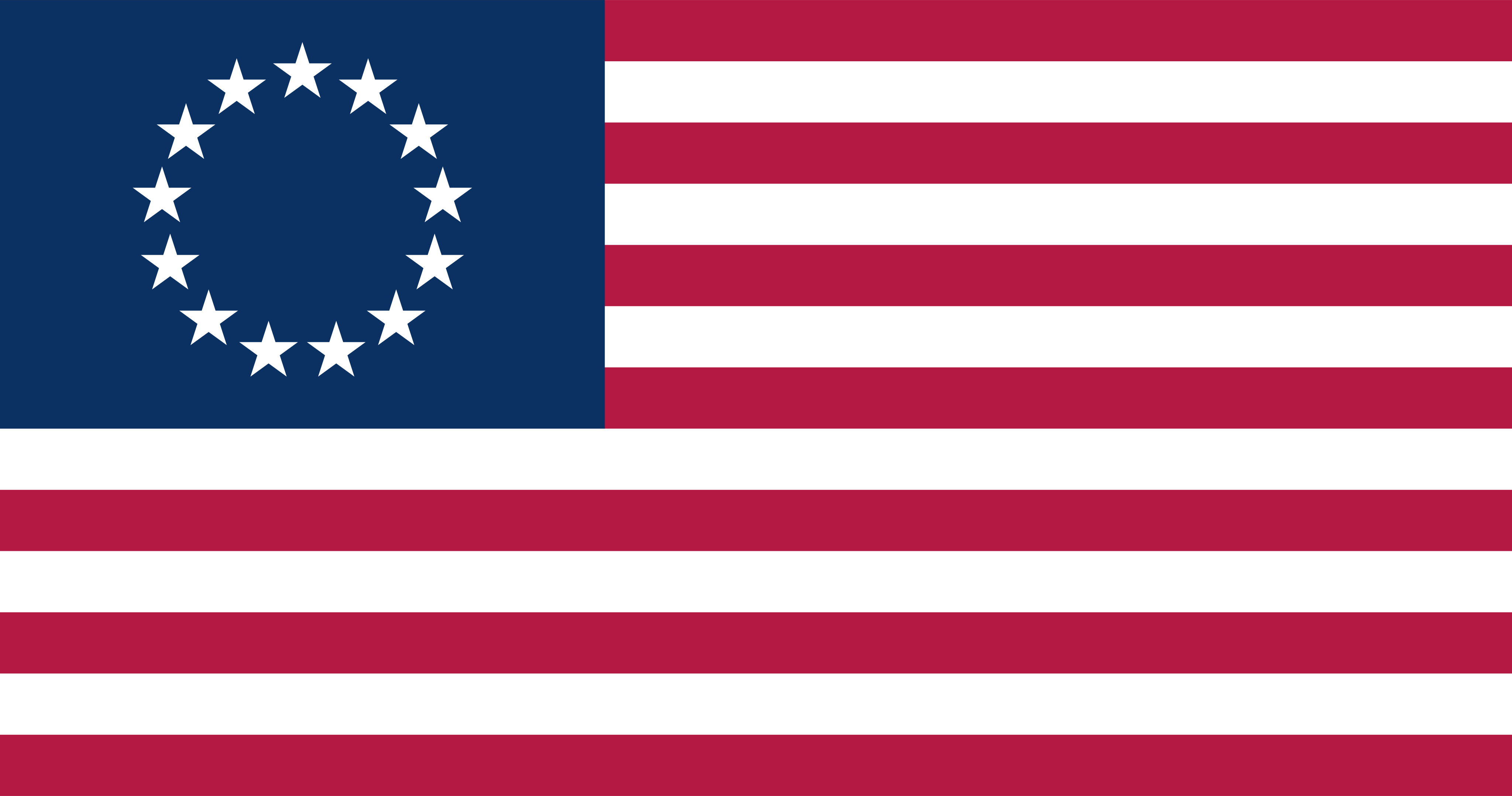
Constitution Day is one of the days specifically named in the U.S. Flag Code for the display of the American flag. The pairing is fitting: the Constitution created the government, and within four years of its signing, Congress was legislating the flag that would represent it. If you fly the flag on the Fourth of July, September 17 deserves the same honor. It is the day the country you celebrate in July got its blueprint.
For the story of the flag those framers' generation created, read the history and evolution of the American flag, or explore more Flag Stories.