
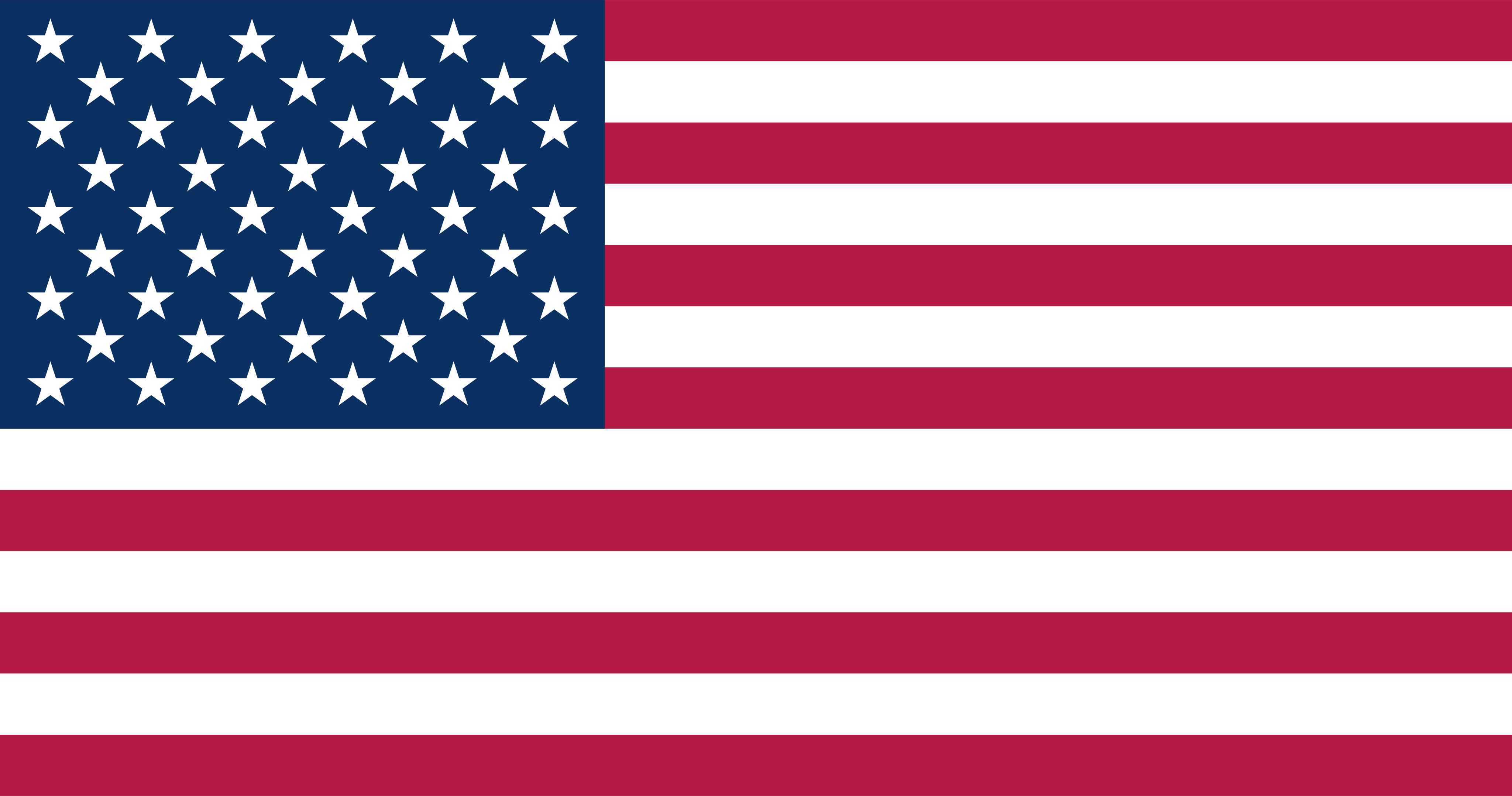
Some flags wave. Superflags loom. Across the country, a handful of American flags are so large they need teams of volunteers to unfurl, steel cables to fly, and serious weather forecasting before anyone dares raise them. Here are the giants.
The Superflag: a world record with a name
The most famous giant flag in America is literally named "Superflag." Created for Thomas "Ski" Demski of Long Beach, California, it was recognized by Guinness World Records as the world's largest flag: 505 feet by 225 feet, weighing roughly 3,000 pounds, with stars taller than a person. It takes hundreds of volunteers to unfurl, and it cannot fly from any pole on Earth; it is displayed flat, draped, or carried.
Its most spectacular appearance came in 1996, when it was unfurled across the face of Hoover Dam as the Olympic torch passed by. Versions of Demski's giant flags have also appeared at Super Bowls and stadium events nationwide, held aloft by fields full of volunteers.
The flag on the George Washington Bridge
On Memorial Day, the Fourth of July, and other patriotic holidays, the Port Authority hangs an American flag from the upper arch of the George Washington Bridge between New York and New Jersey, and traffic slows for the view. At roughly 90 feet by 60 feet, the Port Authority describes it as the largest free-flying American flag in the world. "Free-flying" is the key word: larger flags exist, but they are carried or draped, not flown.
Bigger flags exist. None of them actually fly.
The 400-foot flagpole in Sheboygan
In Sheboygan, Wisconsin, the insurance company Acuity flies an American flag from a 400-foot flagpole, among the tallest flagpoles in North America. The flag itself measures 70 feet by 140 feet and weighs hundreds of pounds, with each stripe more than five feet tall. It is visible for miles along the Lake Michigan shoreline, and the company swaps in a smaller flag when winds run high, because at that scale wind load is an engineering problem, not a nuisance.
Why giant flags are hard
A flag's wind load grows with its area, and superflags measure their area in fractions of acres. A gust that flutters a porch flag can shred a giant one or bend its hardware, which is why the largest flags in the country fly only in moderate weather, are inspected constantly, and are retired and replaced on a schedule. Flying one is a commitment measured in thousands of dollars a year.
There is also an etiquette dimension. The U.S. Flag Code applies to a 505-foot flag exactly as it applies to a hand flag on a parade route: it should never touch the ground, which is why unfurling the Superflag takes hundreds of careful volunteers, and why watching them do it is half the spectacle.
Seeing one in person
Holiday weekends are your best bet for the George Washington Bridge flag, and the Sheboygan flag flies year-round in fair weather. Giant flags also appear at major sporting events, often during the national anthem, held flat over the field. However large the cloth, the protocol in that moment is the same one that governs every flag: stand, face it, and give it your attention.
For more flag superlatives, from the Moon landings to the oldest surviving Stars and Stripes, read 10 Fascinating Facts About the American Flag, or see where to visit America's most famous flags.